Baltimore County marriage records and Baltimore County divorce records are official legal documents maintained by the court system and local record offices. These records serve as verified proof of marital status, documenting either the issuance of a marriage license or the entry of a finalized divorce decree. Individuals request these documents for legal filings, immigration matters, name changes, insurance claims, estate administration, and personal record verification. Marriage records typically include details from the license application and the recorded certificate after the ceremony. Divorce records contain information related to family court filings, case petitions, and the final dissolution judgment entered by the court.
Both marriage and divorce records are part of broader Baltimore County public records, although access levels may vary depending on privacy rules and case sensitivity. Obtaining these documents requires following specific application procedures, eligibility requirements, and payment guidelines. Whether requesting a certified marriage certificate or a divorce decree, submitting the correct forms and documentation helps prevent processing delays. Processing times can vary based on request method and record type. Knowing how to search, request, and verify these records ensures accurate and timely access to official court documentation.
What Are Baltimore County Marriage Records?
Baltimore County marriage records are official state documentation that confirm a legal union between two individuals. These records are created through the process of civil registration, where a couple applies for and receives a marriage license, and the marriage is later recorded by the court after the ceremony takes place. As a formal marital status record, this documentation serves as legal proof of marriage and is recognized for government, financial, and personal purposes. Baltimore County Marriage records are maintained by the appropriate court authority and preserved as part of the county’s public record system.
Legal Definition
A marriage record is a legally recognized document that verifies a marriage has been lawfully performed and recorded under Maryland law. It becomes part of official court archives once the completed license is returned and filed. This record may be required for name changes, spousal benefits, insurance updates, immigration filings, tax purposes, and other legal matters. Because it is tied to civil registration procedures, it carries evidentiary value in courts and government agencies.
Marriage License vs. Marriage Certificate
Although often used interchangeably.
A marriage license and a certificate copy are not the same:
- Marriage License: Issued before the wedding ceremony, granting legal permission for the marriage to occur.
- Marriage Certificate: Generated after the ceremony and filing, confirming the marriage has been officially recorded.
- Certificate Copy: An official or certified duplicate used for identification, benefits, or legal verification.
- The license authorizes the union; the certificate proves it took place.
Public Record Status
Marriage records in Baltimore County are generally considered public records, meaning basic information may be accessible for record verification purposes. However, certified copies may require a formal request and payment of applicable fees. Access rules may vary depending on the type of document requested and privacy considerations. As part of Maryland’s structured civil registration system, Baltimore County marriage records provide reliable proof of marital status while ensuring proper archival and public access procedures are followed.
How to Search Baltimore County Marriage Records
Searching Baltimore County marriage records can be completed through several official channels depending on your needs. Whether you require a basic marriage record search for informational purposes or a certified document for legal use, Maryland provides structured options for public records access. Individuals may search online, visit the appropriate office in person, or complete an online request or mail application. Understanding the correct process ensures faster results, accurate verification, and compliance with identification requirements.
Online Search Process
The most convenient way to begin a marriage record search is through the official Maryland Judiciary Case Search system and related state resources. This online database allows users to verify whether a marriage filing exists and review basic case details. Although full certified copies are not typically available for direct download, the portal helps confirm record availability before submitting a formal request. By checking the system first, users can save time and ensure they follow the correct application process for obtaining official documentation.
Official Maryland Judiciary Case Search: https://www.mdcourts.gov/clerksoffice/marriage
Steps for online access:
- Select the appropriate county and record type.
- Enter names and approximate marriage date if required.
- Complete any required verification steps.
- Submit an online request for certified documentation if available.
Online systems typically provide status details, filing confirmation, and instructions for document submission. Processing time varies depending on request volume and verification requirements.
In-Person Search at Vital Records Office
Individuals who require immediate assistance or certified copies may visit the appropriate vital records office or clerk’s office in person. In Baltimore County, marriage licenses are issued by the Circuit Court for Baltimore County Clerk’s Office. Certified copies of certain records may be obtained through the Maryland Department of Health or court archives, depending on the date of the record. Requirements and availability can vary based on whether the document is recent or archived. Visiting the correct office ensures faster processing and accurate retrieval of official records.
When visiting in person, bring:
- Valid government-issued photo identification
- Full names of both spouses
- Approximate marriage date
- Applicable fees for certified copies
In-person visits may reduce overall processing time, especially when documentation is complete. Staff members can guide applicants through the document submission and identity verification process to ensure accuracy.
Mail Request Process
If visiting the courthouse is not possible, individuals may request certified copies by mail. This option requires completing the official application form and including all required documentation. Applicants must provide accurate case details, proper identification, and the correct payment amount. Careful attention to submission guidelines helps prevent delays or rejected requests. Mailing certified copy requests offers a convenient alternative while maintaining compliance with court procedures.
Mail request steps:
- Download the appropriate request form from the Maryland Vital Records website.
- Complete the application with accurate identifying details.
- Include a copy of valid photo identification.
- Provide payment according to the state fee schedule.
- Mail the request to the listed address.
Mail requests may take longer due to delivery times and internal review procedures. Applicants should allow additional time for processing and verification steps, especially during peak seasons. By choosing the appropriate search method online, in person, or by mail individuals can efficiently obtain Baltimore County marriage records while ensuring compliance with state documentation standards and public records regulations.
How to Apply for a Marriage License
Applying for a marriage license in Baltimore County follows a clear application process outlined by the Maryland Judiciary, and must be completed in person at the Circuit Court Clerk’s Office where the wedding will take place. A marriage license grants legal authorization for a couple to marry in Baltimore County and forms the basis for the marriage application form that must be submitted under oath. Before beginning, applicants should gather required documentation and plan for applicable fees and waiting periods.
Eligibility & Age Requirements
To be legally eligible for a marriage license in Baltimore County, both applicants must meet minimum age and documentation standards. Maryland law generally requires individuals to be at least 18 years old to marry without additional conditions. Applicants under 18 are not permitted to marry, and a 17‑year‑old may only do so with parental consent or a court order under strict rules. Each party must provide valid government‑issued identification and proof of age, such as a birth certificate or passport, at the time of application.
Key requirements include:
- Both parties must present valid photo ID or birth certificate.
- Social Security numbers required by law (not printed on the license).
- If previously married, details of the divorce or spouse’s death must be provided.
Waiting Period & Validity
After submitting a marriage application in Baltimore County, there is a mandatory 48‑hour waiting period before the license becomes effective. The license does not take effect until 6:00 a.m. on the second calendar day after issuance. Once active, the marriage license remains valid for six months. The marriage must be performed within this period to be legally recognized. Adhering to these timelines ensures the marriage is properly recorded and legally binding.
Fees & Payment
The fee for a Baltimore County marriage license is typically $35, payable at the time of application. Payment methods generally include cash, credit card (Visa, MasterCard, Discover), check, or money order made payable to the Clerk of the Circuit Court. Fees are non‑refundable once the license is issued.
Summary of costs:
- Marriage license fee: ~$35
- Civil ceremony fee (if courthouse ceremony scheduled): ~$25
Identification & Documentation Review
When applying, the clerk will review all submitted documentation to verify legal eligibility and ensure the information on the marriage application is complete and truthful under oath. Accurate details prevent delays or rejection. It’s recommended that applicants bring copies of all documents and complete as much information as possible prior to arrival.
Official Application & Forms
The marriage license application must be submitted directly at the Clerk’s Office:
Official Baltimore County Marriage License Page: https://www.courts.state.md.us/clerks/baltimore/licensing/
Once the marriage license is issued, couples can use it to schedule their ceremony anywhere within Baltimore County before it expires. Follow any additional Clerk guidance on appointments or ceremony requirements as needed.
How to Obtain a Certified Copy of a Marriage Certificate
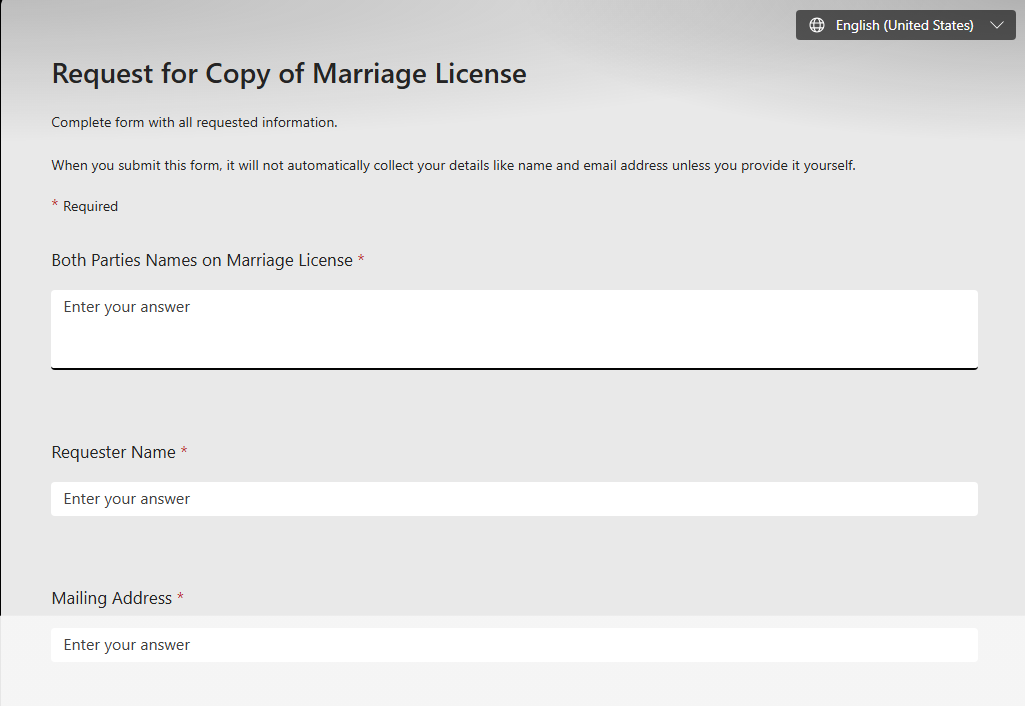
Obtaining a certified copy of a marriage certificate in Baltimore County is an important step for legal, financial, or personal purposes. A certificate copy serves as official proof of a marriage and can be used for name changes, passport applications, tax records, and other forms of record verification. The process is straightforward when following the Clerk of Court’s guidelines, ensuring accuracy and compliance with Maryland law.
Who Can Request a Certified Copy
Access to a certified copy of a court record is restricted to specific individuals to protect privacy and sensitive information. Typically, parties directly involved in the case, their attorneys, or authorized representatives may request these documents. Proper identification and documentation are required to verify eligibility. These measures ensure that confidential information remains secure while still providing authorized access. Limiting access helps maintain the integrity and privacy of Baltimore County court records.
Eligible requesters include:
- The married couple named on the certificate.
- Immediate family members such as parents, legal guardians, or children.
- Legal representatives with notarized authorization.
- Government agencies or organizations requiring verification for official purposes.
Fees
Fees for obtaining certified copies in Baltimore County vary based on the number of copies requested. Each additional copy may incur an extra charge, depending on the type of document. Accurate payment ensures that the request is processed without delay. Applicants should check the current fee schedule before submitting requests. Properly handling fees helps guarantee timely access to official court records.
The standard charges in Baltimore County include:
- $30 per certified copy (subject to change; verify on the official website)
- Additional copies may incur extra fees.
- Payment is accepted via cash, check, money order, or credit/debit card at the public counter.
Turnaround Time
Processing time depends on the method of request:
- In-person requests: Typically issued immediately or within the same day.
- Mail requests: Usually take 7–10 business days for processing and delivery.
- Online requests (if available through Maryland Vital Records): Processing varies by volume but typically 7–10 business days.
Acceptable Identification
To obtain a certified copy, requesters must present valid identification to verify eligibility:
- Government-issued photo ID (driver’s license, passport, or state ID)
- Notarized authorization if requesting on behalf of another person
- Proof of relationship for family members (e.g., birth certificate)
What Are Divorce Records?
Divorce records are official documents generated by the court when a marriage is legally dissolved. In Baltimore County, these records include the divorce decree, petitions, and other related filings. They serve as proof of the termination of marriage and are often required for legal, financial, or personal purposes, such as changing names, updating tax information, or applying for benefits. Understanding the types of divorce records and how they differ is important for anyone accessing Baltimore County Court documentation.
Divorce Decree vs Case File
A divorce decree is the official court order that finalizes a divorce. It outlines the legal termination of the marriage and specifies the terms agreed upon or ordered by the court. The decree may include details on property division, child custody, support obligations, and other related matters. Obtaining a copy of the divorce decree is essential for legal, financial, and administrative purposes. It serves as the definitive record of the court’s judgment in the divorce case.
It contains key information such as:
- Names of both parties
- Date of final judgment
- Division of property or assets
- Custody arrangements, if applicable
- Any spousal support or alimony requirements
In contrast, the case file includes all documents submitted during the divorce process, such as the original petition, motions, responses, and court notes. While the decree represents the final resolution, the case file provides a complete record of the proceedings.
Key distinctions:
- Divorce Decree: Official final judgment; legally binding.
- Case File: Compilation of all filings, motions, and court documents during the case.
Final Judgment vs Petition
The petition is the official document that begins the divorce process in Baltimore County. It outlines the grounds for dissolution, requested relief, and any preliminary agreements between the parties. After submission, the court reviews all evidence, motions, and hearings related to the case. Once the review is complete, the court issues a final judgment, which is formally recorded in the divorce decree. This process ensures that all actions are documented and legally recognized.
Quick comparison:
- Petition: Initiates the divorce; contains requests and claims.
- Final Judgment: Court’s decision on all issues; recorded in the decree.
Access to divorce records may be required for personal verification, legal matters, or historical research. The Baltimore County Court maintains these records in a secure and organized system, allowing eligible individuals to request certified copies when needed. By distinguishing between petitions, final judgments, and decrees, users can better understand which document serves their specific purpose.
How to Search Baltimore County Divorce Records
Searching divorce records in Baltimore County requires knowing the available tools, proper procedures, and the types of information that can be accessed. The Baltimore County Clerk of Court manages all official divorce filings, ensuring records are accurate and properly maintained while following privacy rules. Whether you are an attorney, researcher, or family member, following the correct steps helps you retrieve complete and official information efficiently. Using the proper procedures ensures timely access to records and reduces the risk of errors. This process supports transparency while protecting sensitive family information.
Online Case Search
The Maryland Judiciary provides an online case search platform that allows users to perform a divorce case search from any internet-enabled device. This system is part of the court docket for family law cases, enabling users to view case summaries, track filing progress, and access certain public records.
Steps to perform an online search:
Visit the Maryland Judiciary Case Search portal: https://casesearch.courts.state.md.us
- Select the District Court or Circuit Court option and choose Baltimore County.
- Enter the party name (spouse or petitioner) or case number if available.
- Click “Search” to view the divorce case docket and summary.
- Review entries to see hearings, motions, and case status.
Searching by Case Petition
Another way to locate divorce records is by reviewing the case petition filed in family court. The petition contains key information, including the names of the parties, filing date, and nature of the divorce. This method is especially useful for legal professionals or family members who need detailed insights beyond the online docket.
Steps for searching via case petition:
- Visit the public counter of the Baltimore County Clerk of Court Office.
- Request access to the family court filings for the relevant case.
- Provide the full names of the parties and approximate filing date.
- Review the petition to confirm case details, motions, and associated filings.
Benefits of petition searches:
- Direct access to primary case documents.
- Ability to verify filing details and legal representation.
- Useful when online searches return multiple or incomplete records.
Requesting Records from Clerk of Court
For official purposes, many users require a certified copy of a divorce record. These copies are issued by the Baltimore County Clerk of Court and serve as legally recognized proof of filing or decree. A filing fee applies to certified copies, which varies depending on document type and number of pages.
Steps to request records:
- Visit the Clerk’s Office in person or submit a request by mail.
- Provide the case number, full names of parties, and type of document requested.
- Pay the applicable filing fee (cash, check, or card accepted in-person).
- Receive either a paper copy or, in some cases, a certified electronic copy.
How to Obtain a Certified Divorce Decree
Obtaining a certified divorce decree is an important step for individuals who need an official copy of their divorce record for legal, financial, or personal purposes. A certified copy is a legally recognized document issued by the Baltimore County Clerk of Court that confirms the finalization of a divorce. Unlike a plain copy, a certified divorce decree includes the court’s seal and signature, making it valid for use in government agencies, banks, or legal proceedings.
Eligibility to Request a Certified Divorce Decree
Generally, the following individuals are eligible:
- Parties listed on the divorce decree (plaintiff or defendant).
- Legal representatives or attorneys acting on behalf of a party.
- Government agencies or entities with a lawful purpose.
Those requesting a copy must provide proof of eligibility to protect the privacy and confidentiality of personal records. Requests from unauthorized individuals may be denied
Identification Required
When requesting a certified copy, proper identification is required to verify eligibility. Acceptable forms of ID include:
- State-issued driver’s license or identification card.
- Passport or military ID.
- Attorney or legal representative credentials with authorization letter.
Ensuring correct ID is submitted prevents delays or rejection of the request.
Processing Times and Fees
Processing times for certified divorce decrees vary depending on the method of request:
- In-person requests: Typically processed immediately or within 1–2 business days.
- Mail requests: Usually take 2–4 weeks, depending on mail delivery and document verification.
- Online requests: Some courts allow secure online submissions, which may take 1–3 weeks.
Fees for certified copies are generally set per page and may differ slightly based on filing type. Acceptable payment methods include cash, check, money order, or credit card, depending on the court’s rules.
How to Submit a Request
- Visit the Baltimore County Clerk of Court public counter or courthouse.
- Provide proof of eligibility and a valid photo ID.
- Complete the certified copy request form and pay the applicable fee.
- For mail requests, include a self-addressed stamped envelope and payment.
By following these steps, individuals can efficiently obtain a certified divorce decree, ensuring they have an official document recognized for legal and personal purposes. The process is straightforward when eligibility, identification, and processing requirements are met.
Divorce Records vs Legal Separation
Divorce and legal separation are both legal processes that affect marital relationships, but they serve different purposes and have distinct implications. A divorce results in the formal termination of a marriage, whereas legal separation allows a couple to live apart while remaining legally married. Understanding these differences is important for anyone reviewing divorce records or considering a marital dissolution process in Baltimore County.
Divorce Records
A divorce is a court-issued marital dissolution that officially ends a marriage. Divorce records include documents such as petitions, decrees, and judgments, which outline the court’s decisions regarding property division, child custody, spousal support, and other legal matters. These records are maintained by the Baltimore County Clerk of Court and can be requested for personal, legal, or administrative purposes.
Key features of divorce records:
- Finalized court order terminating the marriage.
- Details on child custody, visitation, and support agreements.
- Property division and spousal support information.
- Publicly accessible unless sealed by court order.
Legal Separation
Legal separation allows a couple to formalize their living arrangements and responsibilities without ending the marriage. This process typically involves a separation agreement, outlining support, property, and child custody arrangements. Unlike divorce, legal separation does not create a marital dissolution, so the spouses remain legally married and cannot remarry.
Key aspects of legal separation:
- Court-approved separation agreement for financial and parenting arrangements.
- Maintains the legal marriage while formalizing separation.
- Can be converted to divorce later if the couple chooses.
- Records may be filed with the court for enforcement purposes.
Frequently Asked Questions
This section answers common queries about the Baltimore County Clerk of Court, divorce records, and public access services. Each response provides clear guidance while highlighting official procedures, helping residents, legal professionals, and researchers access records accurately.
How long does it take to obtain court records?
The processing time for Baltimore County court records depends on the type of record and request method. For certified copies submitted by mail, it usually takes 5 to 10 business days for processing. In-person requests at the Clerk’s Office can sometimes be completed the same day for routine documents. Complex cases or large filings may require additional time. Tracking the request and including all necessary identification and fees ensures quicker handling.
Who can request Baltimore County court records?
Most public court records are available to any interested party, including individuals, attorneys, and businesses. Some documents, however, are restricted due to privacy laws, such as juvenile, sealed, or sensitive family law cases. For these, only authorized individuals with proper identification or legal authorization may access records. The Clerk’s Office can clarify which requests require additional approval or documentation.
Are marriage records public?
Yes, marriage records maintained by Baltimore County are considered public and can be accessed by the parties involved, family members, or authorized representatives. Copies are often requested for legal purposes, name changes, genealogical research, or personal records. Some older records may require additional verification, and fees apply for certified copies. The Clerk’s Office ensures records are accurately maintained and accessible according to Maryland rules.
How much does a certified copy cost?
Certified copies of court records generally cost $5 per page, though fees can vary depending on the type of record, such as civil, criminal, or family law filings. Additional costs may apply for expedited processing or large document requests. Payment can typically be made by cash, check, money order, or credit card at the public counter. Consulting the current fee schedule online or at the Clerk’s Office helps avoid underpayment or delays.
How can I request a copy of my Baltimore County divorce records?
Divorce records may be requested in person at the Clerk’s Office, by mail, or in limited cases through the Maryland Judiciary online case search portal. Requests should include the full names of both parties, the date of divorce, and valid identification. Using complete information ensures accurate retrieval from the archives. Certified copies require payment of the applicable fee, and additional instructions may apply for older or sealed records.
Who is eligible to access divorce records in Baltimore County?
Eligible individuals include the parties named in the divorce, their legal representatives, and certain authorized third parties, such as government agencies or genealogical researchers. In some cases, a notarized statement or court authorization is required. The Clerk’s Office verifies eligibility to protect privacy while ensuring lawful access. Records are maintained permanently, and access is guided by Maryland Rules.
What is the difference between a divorce decree and a case petition?
A divorce decree is the final official court order that legally dissolves a marriage. The case petition, on the other hand, is the initial filing submitted to the court requesting a divorce. While the petition begins the legal process, the decree represents the court’s final judgment and may include provisions on property, custody, or support. Understanding this distinction is essential when requesting records.
Can I search divorce records online in Baltimore County?
Some records are available through the Maryland Judiciary Case Search portal, which allows users to perform searches using party names or case numbers. While the portal provides case summaries and procedural history, certified copies still require formal requests at the Clerk’s Office. Online access provides convenience, but official documents for legal or personal use must be obtained directly.
How long are divorce records maintained?
Divorce records are kept permanently by the Clerk’s Office in both electronic and paper formats. This ensures that records remain available for authorized requests, research, or verification. Proper archiving helps maintain accuracy, supports legal proceedings, and guarantees compliance with state regulations.
Can I obtain a divorce record for genealogy research?
Yes, authorized individuals conducting genealogical or historical research may request copies of divorce records. Some records may be restricted due to privacy concerns, especially for recent cases or sealed documents. Researchers are typically required to provide identification and justify their request to comply with Maryland Rules and maintain confidentiality.